|
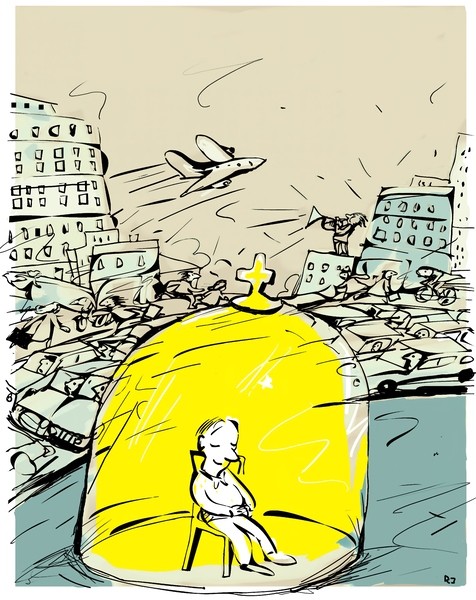
"We Belong to God" | By Rev. Liz Miller The Pharisees came to Jesus that day with smiles on their faces, but traps in their hearts. They praised Him. They complimented Him. They told Him He was honest and trustworthy. But their words were not born of admiration. They were bait. They hoped to lower His guard. They hoped to catch Him saying something wrong. They wanted a mistake they could use against Him. But Jesus was not impressed by their influence, their status, or their flattery. The praise of men has no power over the One who knows every human heart. So, they asked, "Is it lawful to pay taxes to Caesar or not?" They thought it was a perfect trap. If Jesus says yes, He risks losing the support of people who despised Roman taxes. If He says no, Rome could arrest Him for rebellion. The question was designed to leave Him with no escape. But when human cleverness confronts divine wisdom, human cleverness is exposed. Jesus asks for the coin. Holding it up, He asks, "Whose image is this?" "Caesar's," they answer. And then comes one of the most profound statements in all the Gospels: "Render unto Caesar what belongs to Caesar and unto God what belongs to God." At first glance, it sounds like Jesus is talking about taxes. But He is doing much more than that. He is teaching us who we are. The coin bore Caesar's image. Therefore, it could be returned to Caesar. But the deeper question is this: Whose image do we bear? Not a coin. Not a possession. Not a government. What image do you and we bear? From the very first chapter of Genesis, Scripture gives us the answer. God created humankind in his image. The coin belongs to Caesar because it carries Caesar's image. But we belong to God because we carry God's image. That means our life is not an accident. Our worth is not determined by the market, politics, achievements, failures, likes on social media, or other people's opinions. We are stamped with the image of the living God. We belong to Him. And because we belong to Him, He never stops seeking us, loving us, calling us, and inviting us into His life. I once heard a story about a young boy in a small Tennessee town. A pastor invited him to church through a bus ministry. The boy had never been inside a church before. He had recently heard about Jesus and had opened his heart to the gift of salvation. The following Sunday, he sat in a pew and watched everything unfold. Then came the collection. He noticed people placing money into the offering plates. As he watched, a thought struck him: these people were giving something to Jesus. The boy reached into his pockets and found nothing. Not a penny. Not a dollar. Nothing. He felt disappointed. Jesus had given him such a wonderful gift, and he had nothing to give in return. Then an idea came to him. He walked to the back of the church and asked for the offering plate. The ushers handed it to him. He placed it on the floor, stepped into it, and said: "Jesus, I don't have any money to give You today, but I give You myself." Brothers and sisters, that little boy understood the Gospel better than many of us do. Because in the end, that is what God wants most. Not merely our money. Not merely our time. Not merely our talents. He wants us. He wants our hearts. He wants our trust. He wants our obedience. He wants our love. The greatest offering we can bring to the Lord isn't found in our wallets. It is found in our willingness to say, "Lord, I belong to You." The world desperately needs that witness today. We live in a time of division and anxiety. Anger seems to spread faster than kindness. People quickly label, dismiss, and even hate one another. Yet every person we encounter bears the image of God. The elderly neighbor. The struggling teenager. The immigrant. The wealthy executive. The homeless veteran. The person who agrees with us. And the person who disagrees with us. God created every single one, loved them, and called them. When we forget that, we lose our way. When we remember it, we begin to see with the eyes of Christ. |
||
 |
Haven of Rest
Formerly Saint Clare Pastoral Center
Formerly Saint Clare Pastoral Center
 |
"God does not see you as a Jew or as a Greek. He does not see you as a servant or as a free person. He does not see you as a man or as a woman. You are all one in Christ. If you belong to Christ, then you have become the true children of Abraham. What God promised to him is now yours." (Galations 3:27b-29 NLV)
Copyright © 2026 Safe Haven Spiritual Center. All Rights Reserved.